As GE splinters, Fb turns into Meta : Planet Cash : NPR
 [ad_1]

Bloomberg/Bloomberg by means of Getty Photographs
Within the first scene of the primary episode of the vintage sitcom 30 Rock, tv showrunners Liz Lemon and Pete Hornberger nervously stroll into an administrative center underneath renovation to fulfill their boss, Gary. They may be able to't see him anyplace. "The place is Gary?" asks Lemon. Simply then a person in a go well with kicks down a wall and barges into the room. "Gary's lifeless," the person says. "I am Jack Donaghy, new VP of construction for NBC-GE-Common-Kmart."
Donaghy explains GE has promoted him as a result of "his largest triumph": the GE Trivection oven. It combines radiant warmth, convection, and microwave era, permitting you to "prepare dinner a turkey in 22 mins." His function in growing the oven is "why they despatched me right here to retool your display," Donaghy explains. "I am the brand new vp of East Coast tv and microwave oven programming."
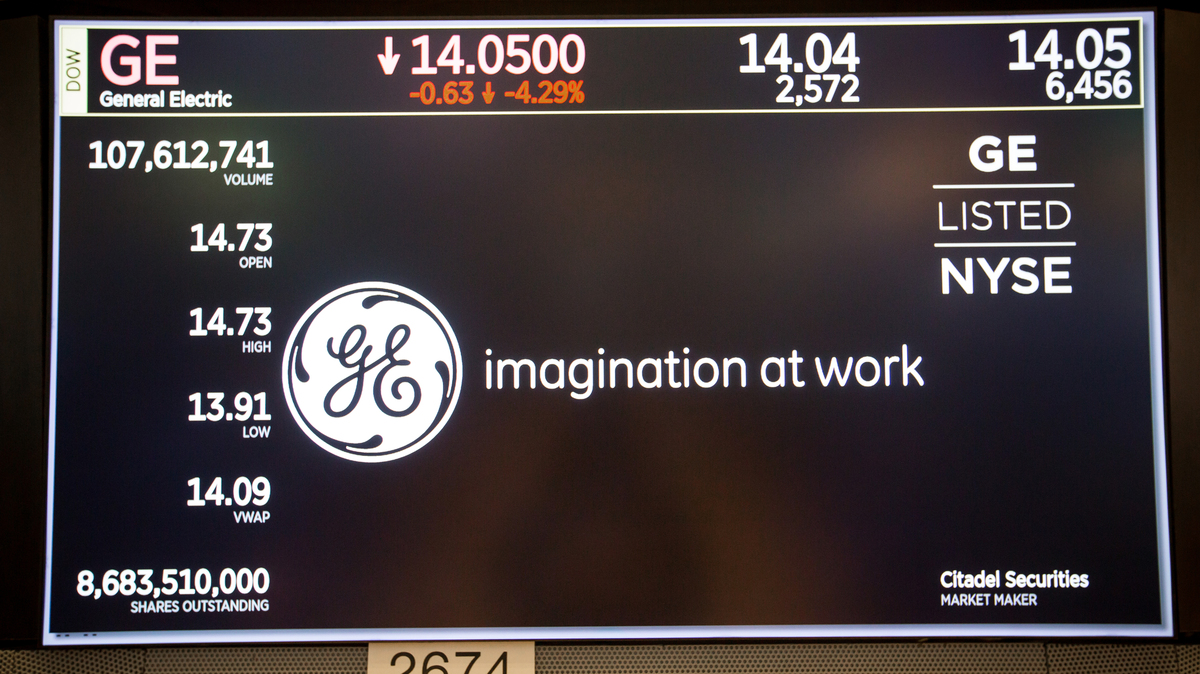
30 Rock completely encapsulated the absurdity of conglomerates, behemoth firms working in a mishmash of unrelated industries. In spite of downsizing within the years since 30 Rock first aired (2006), GE remained the quintessential conglomerate. This is, till previous this month, when GE introduced it was once splitting into three separate firms, independently inquisitive about aviation, healthcare, and effort. Personal fairness corporations are expected to additional select away on the death conglomerate's carcass.
It's possible you'll name this the top of the conglomerate age. However, in actual fact, that age ended a long time in the past in america. GE is only one of a couple of lumbering dinosaurs that survived the asteroid crash.
However whilst the previous American conglomerates are going extinct, a brand new breed is evolving to take their position on the best of the meals chain: Techglomerates. Firms like Google, Fb, and Amazon had been obtaining firms and coming into into industries they have got historically had no involvement in.
Traders deal with old-school conglomerates like they are radioactive, however they are treating Techglomerates like they are Pete Davidson (who it seems that everyone needs to carry at the present time). Name it the Conglomerate Paradox. However are Techglomerates actually other? Or will the similar forces result in their loss of life?
When Conglomerates Had been Groovy
Again within the overdue Nineteen Sixties, conglomerates had been all of the rage. Take the ITT Company, which, via a frenzy of acquisitions, managed firms like Sheraton Accommodations, Avis automotive leases, Hartford Insurance coverage, and the maker of Marvel Bread. Or the LTV Company, which oversaw firms in aviation, shopper electronics, missile production, wearing items, and meat packing. Or Litton Industries, which started as an electronics corporate and protection contractor, however wolfed up Stouffer's frozen meals, a typewriter corporate, a producer of family home equipment, and quite a lot of furnishings makers. In 1968, The Saturday Night Submit mag declared in a headline, "It Is Theoretically Imaginable for the Complete United States to Turn out to be One Huge Conglomerate."
[Editor's note: This is an excerpt of Planet Money's newsletter. You can sign up here.]
Again when conglomerate mania was once at its zenith, within the mid-to-late Nineteen Sixties, Baruch Lev was once a PhD scholar on the College of Chicago. "I remember the fact that one of the most first questions within the first finance examination that I took was once: what's the trade rationale for conglomerates?" says Lev, who just lately retired after a few years as a professor at NYU's Stern Faculty of Trade.
To many firms, the solution was once easy: it was once some way for them to get larger and extra winning. The government, whilst actively hostile to many varieties of mergers and acquisitions, was once beautiful lax when it got here to firms increasing into unrelated industries. However, much more importantly, firms believed that by means of branching out into more than one strains of commercial, they may strategically fortify each and every of the ones companies and insulate themselves from the ups-and-downs of markets. If one trade had a foul yr, as an example, conglomerates may just cushion losses with earnings from different industries.
"The theory was once that by means of making an investment in different industries, you diversify the money float of the corporate," Lev says. "Other folks mentioned 'inside capital markets,' permitting you to allocate cash from this corporate to that corporate." The buzzword was once "synergy," and the speculation was once that the sum of an organization may well be price greater than its person portions. With a conglomerate, the pondering went, 2 + 2 = 5.
Conglomerate Turns into A Dangerous Phrase
Lev by no means purchased into the conglomerate hype. "The entire thing was once a sham," he says. The core financial case for a conglomerate was once diversification, the facility of an organization to stabilize and spice up its proportion value by means of branching out into a various array of industries. However, Lev says, traders can do diversification themselves. In case you are anxious that the airline trade could have a foul yr, as an example, you'll put a few of your cash in a healthcare corporate. You don't want some CEO of an airline corporate to shop for and arrange the healthcare corporate.
"There may be completely no trade justification for conglomerates, as a result of traders can succeed in — on their very own — the whole thing that the conglomerate achieves," Lev says. This was once particularly the case after the upward push of mutual, exchange-traded, and index price range, which enable traders to diversify possibility and purchase stocks of a various array of businesses very cost effectively.
Additionally, traders can do that with no need to take care of all of the issues that conglomerates create. Issues that get up when a bloated company paperwork struggles to supervise an unwieldy collection of companies: deficient oversight, mismanagement, and sketchy choices, like sending the person at the back of the GE Trivection oven to run a tv display.
It is why, Lev says, learn about after learn about unearths conglomerates are inevitably harm by means of one thing referred to as "the diversification discount." It refers to proof that a conglomerate's inventory value is round 10 p.c less than it will be if the conglomerate had been as an alternative damaged aside and bought at the inventory marketplace as separate firms. It seems the entire is in fact price lower than the sum of its portions. With a conglomerate, 2 + 2 = 3.
Within the Nineteen Eighties, traders wised as much as all this — and there was once a massacre for conglomerates in america. Jerry Davis, a professor on the College of Michigan's Ross Faculty of Trade, printed a study about their dramatic decline. He says it was once facilitated, partly, by means of a 1982 Superb Courtroom case that made it more straightforward for monetary corporations to take over and restructure floundering companies. Through 1990, Davis says, "the everyday company was once far more lean and inquisitive about its core competence."
The Upward push Of The Techglomerate
Baruch Lev has been running on a guide about mergers and acquisitions, and as a part of that, he just lately analyzed 36,000 company acquisitions during the last couple a long time. He discovered that, during the last 10 to fifteen years, the share of acquisitions that may be classified as conglomerate-style acquisitions spiked to about 47%. "It stunned me tremendously," Lev says.
This spike in conglomeration is pushed by means of tech firms. Fb, which just lately rebranded itself as Meta, has purchased firms like Ascenta, a solar-powered drone maker, and Oculus, a digital fact corporate. Amazon has purchased firms like Metro-Goldwyn-Mayer, a media corporate, and Entire Meals. Google has been venturing into companies fascinated about the whole thing from smartphones and glasses to self-driving vehicles and podcasting.
The inventory marketplace has traditionally punished conglomerates. Even the CEOs of conglomerates like 3M deny they are a conglomerate since the time period is a stinker. However the Techglomerates appear to be getting a go.
Baruch Lev believes they should not. For a similar causes that old-school conglomerates blundered into 2 + 2 = 3, he says, those new-school conglomerates will do the similar. Their consideration shall be unfold too skinny. They would possibly not to find synergies of their acquisitions. They're going to mismanage their subsidiaries. The relentless common sense of the diversification cut price will come for his or her proportion costs too.
The rationale they have got been skating by means of in capital markets, Lev says, is that their core companies are insanely winning. It is like they have got had a halo, which lets them escape with issues conventional firms can't. They may be able to fiddle with billions of greenbacks and escape with it, no less than for now. "The day of reckoning is coming," he says.
However it is usually conceivable that — in contrast to old-school conglomerates — tech firms actually do possess concepts, ability, and expertise that interprets smartly into quite a lot of companies out of doors in their core specialization. Jerry Davis means that perhaps the Techglomerates actually are drizzling a type of particular sauce on their acquisitions. The longer term is cloudy, he says, however the long run shall be tech. It is going to make sense to spend money on firms that attempt to focus on all issues tech, even though they are increasing into spaces out of doors in their convenience zone. Positive, there shall be many duds of their portfolio. However there may well be some giant winners.
Davis, slightly paradoxically, pointed to GE's centuries-long reign as a a success conglomerate. The kid of Thomas Edison, GE got here out of the gate as a conglomerate, working in a various set of industries like energy era, lightbulbs, radios, and so forth. GE, he says, was once initially "within the trade of all of the stuff you'll do with electrical energy," and it actually did possess the tips, ability, and expertise that allowed it to achieve a wide selection of industries for a very long time.
"Google is the Basic Electrical of the twenty first century," Davis says. "GE was once the stuff you'll do with electrical energy. Google is stuff you'll do with the web."
But if Google begins purchasing up cat meals and microwave oven makers or one thing, beware.


Comments
Post a Comment